Showing posts with label Green Living. Show all posts

Monday, August 29, 2011

How To (Partially) Deconstruct a Sunroom

Remember our post about how to recycle just about anything?  We said it then and we'll say it again:  the most important first step to recycling is deconstruction, not demolition.   So what's the difference?  Demolition is destruction of a structure using means such as a sledgehammer.

Reuters
Deconstruction is the careful dismantling of a structure by the same means that it was constructed: with screwdrivers, hammers and the occasional pry-bar.  The purpose is to keep materials intact for future reuse and recycling.

That being said, we've been working on deconstructing the home-made solarium that is taking up space off the back of our house.


Here's how we've done it so far:

Step 1:  Remove furniture, bubble wrap, plastic, carpet, plexiglass, fake wood paneling, curtains, interior gutters, hooks, string, etc.


Step 2:  Attempt to figure out exactly how the structure is constructed.


Step 3:  Have a visit with a kitty (stray or otherwise).
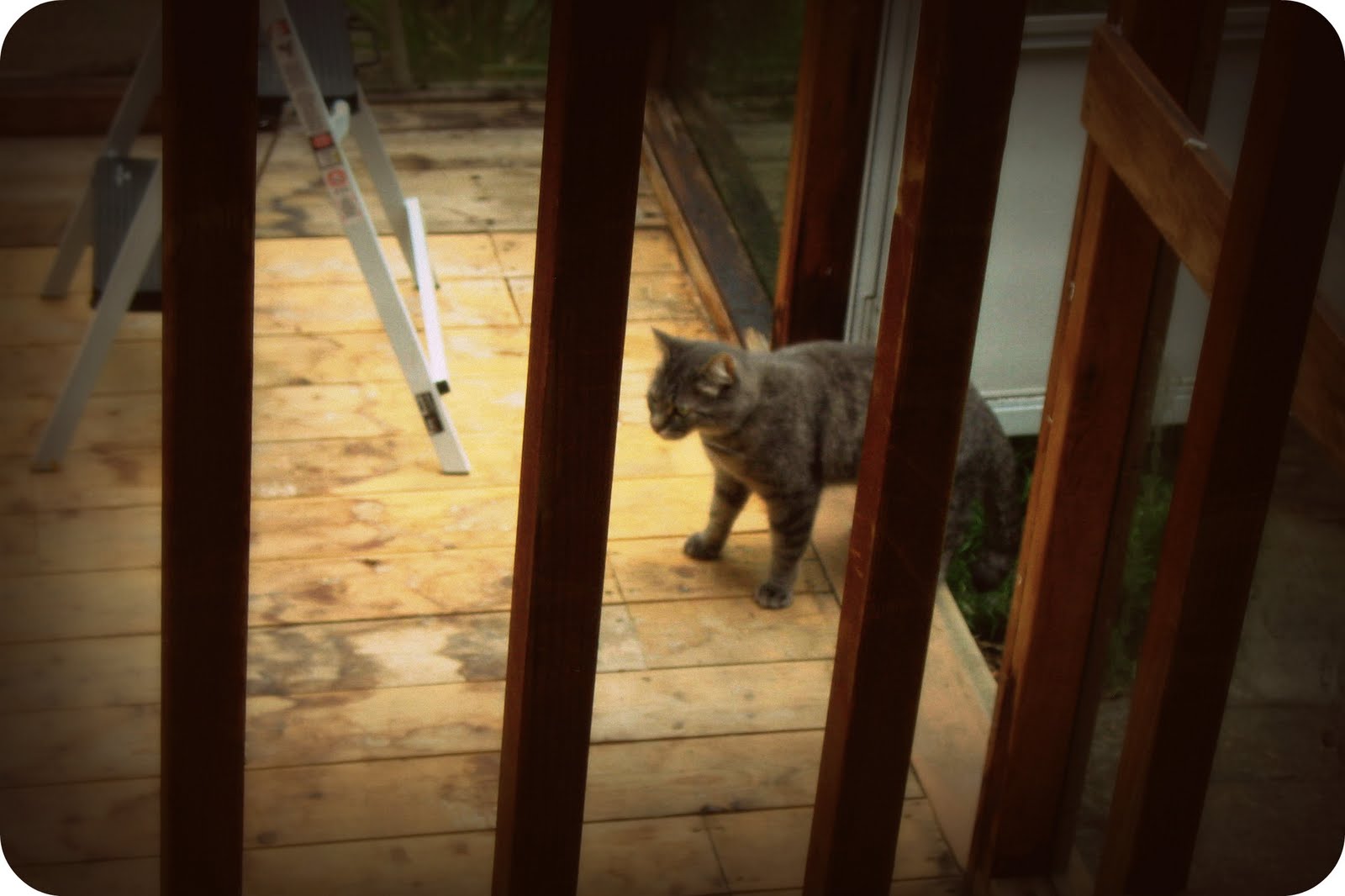

Step 4:  Remove glass panes.


Step 5:  Check to see if glass is tempered.


Step 6:  Assess the damage (and stop the bleeding, if necessary).


Step 7:  Take some artsy photos.


  Step 8:  Clean up the mess.


Step 9:  Repeat steps 3 through 8 as desired.


Step 10:  Remove any unwanted/extremely dangerous spiked bushes.


Step 11:  Continue to remove support pieces as desired and enjoy the view.


Step 12:  Sort wood.  Determine what you can or want to reuse, sort the rest by recycling center standards.  Some centers may not accept wood with paint or nails.


Step 13:  Carry on as desired.  We decided to leave the base and roof of our sunroom as a work area for other house projects.  For now.


The deck will give us a good place to work on sanding and painting projects outside of the house and the cover will offer protection.  Having the windows and many of the support beams out, however, makes the area a hundred times cooler and much nicer to look at.

On a serious note, do check to see if glass is tempered before moving it around.  From experience (we lost two out of nine panes) we recommend wearing gloves, long sleeves and eye protection for moving any type of glass, but our injuries (we just had a few scratches) would have been far worse had the glass not been tempered.

In case you're wondering, the cost of this deconstruction project was a full $0.  Our big savings was not having to rent a dumpster as we had originally planned.  Once everything is down and sorted we'll take a trip in our car or borrow a neighbor's truck to bring the wood in for recycling.  Anything that we have thrown out fit in our trash can for weekly pickup.  Anything that we can't recycle we plan to put on craigslist.org or freecycle.org and hope for some takers.

We hope you enjoyed our tutorial!

Wednesday, August 24, 2011

A Toilet Post

So what?  Sometimes you just have to do a post about the toilet.  Remember our awesome shag carpet toilet from back when we bought the house?


The toilet was promptly de-shagged after we moved in but for quite some time it still sported a very old-people padded toilet seat.  How much more awesome does it get?


Recently we finally sprung for a $7 Bemis molded wood toilet seat from Home Depot.  Hey big spender.  So here you go: shiny, clean, and much less creepy.


Of course, our toilet overhaul couldn't end there.  The throne is rather old and we were feeling like we were literally flushing money down the toilet with each tip of the handle.  So we decided to invest another $20 into the pot for a HydroRight Dual-Flush kit, also from Home Depot.


The kit installed really easily despite the slightly less-than-thorough directions.  We set both the low flush and the high flush settings to use the least possible amount of water and so far so good.  Fancy.


When we went to put the lid back on the toilet, we made a little discovery about just how old our toilet really is.  Check out the stamp on the underside of the lid:


The previous owners must have installed it right after they moved in.  But it's still chugging [kind of a gross image - sorry], so we'll stick with it for now.  Especially now that it's a little bit friendlier to the earth.

Tuesday, July 26, 2011

Keeping it Cool


We haven't had a ton of heat out here in the Northwest so far this summer (today is forecasted at a cool 72 degrees) but we know a lot of our friends and family around the country have been trying to ward off heatstroke on a daily basis lately.  That's why we wanted to share a post from This Old House on ways of staying cool while still conserving energy.  We have central air in our house (a rare commodity for old Portland homes) but we've yet to use it, even on the few hot days we've had.  We're big fans of the "Texas Cool" technique (tip #4) as well as running fans rather than the AC.

Click Here to check out the full post from TOH and keep it cool!

Thursday, July 21, 2011

A Tiny Problem With Some Very Small Ants


Yep.  We have ants.  Not tons of them, and not the big house-eating kind, just a few tiny little ants.  Still pretty gross.  They are sugar ants and true to their name they found our sugar bowl.


Some friends and family suggested ant traps and ant sprays to ward off the pests, but since our problem was still small we wanted to see if there was a simpler, cheaper, and more environmentally and pet friendly way to deal with the ants.  With a little research we found suggestions such as pouring boiling water on the colony if you can find it or tempting the ants into eating borax, cornstarch, or cornmeal which will kill the ants.  Our problem still didn't seem bad enough to resort to killing entire colonies, so we kept looking.

Finally we found some natural ant deterrents.  We had a sneaking suspicion that ants might not like vinegar and it turns out we were right.  We've been cleaning our kitchen counters and floors with a vinegar/water mix from the beginning and we've never seen a single ant in our kitchen (knock on wood).  We also discovered that ants don't like peppers or cinnamon.  You wouldn't like it either if there was a pile of black pepper twice your size in front of you.  Death by sneezing can't be any fun.

It didn't turn out that we needed to resort to pepper or cinnamon, because once we removed the sugar bowl from the picture, the ants lost interest pretty quickly.


Just to be sure, we cleaned the whole area, as well as the windowsills nearby (where we were pretty sure they were coming in) with a 50/50 vinegar and water solution.  In the future we'll be keeping our sugar, as well as any other sweets, in sealed containers that the ants can't make their way into.

For more information on natural remedies for sugar ant problems as well as instructions for a natural borax ant trap check out this article on ehow.

There are also several good tips in this discussion forum ("we have pets including chickens and small children"). 

Thursday, July 14, 2011

How to Recycle Just About Anything

We've started accumulating quite a bit of debris around here from our various cleaning and deconstruction projects.  Currently it is cluttering up our back yard, driveway and garage just waiting to be disposed of.


We'd been planning on renting a dumpster to take care of the mess until today when we started doing some research into how to dispose of the giant sliding door that was overtaking our driveway.


We were doing research on facilities that reuse or recycle building materials and that were willing to pick up large items and were beginning to realize that no one was going to want an old aluminum screen door for their rebuilding project (most places that accept things like doors or windows only accept vinyl).  One facility suggested that we contact a local rebuilding center that might at least take the door and recycle it for us.  Just minutes later, a gentleman rang our doorbell and asked if we would like him to recycle the metal from the door for us.  He is probably going to make a buck or two off us, but we were just happy to get rid of the thing without throwing it in a dumpster!  He offered to take the glass, as well as the glass we had stacked in our yard from the porch deconstruction for a fee, but we declined.  There must be a way that we can do these sort of things ourselves without a timely stranger driving by and offering to dismantle our large debris and hauling it away for us.  With a little more research we began to discovered that we can recycle well... pretty much everything.  So much for that dumpster.  So we wanted to share some tips and steps to recycling everything based on our research and experience:

1.  Deconstruction vs. Demolition:  Our last post was incorrectly named.  What we did to our porch over the weekend was not demolition, it was deconstruction (for the most part).  Deconstruction is when a structure is carefully dismantled in order to maximize the materials that can be reused or recycled.

2.  Get creative about reuse:  Construction materials can be costly if you have to go out and buy them for a future project.  Think about what you can reuse or re-purpose and ask friends and family for suggestions.  For example, Matt's cousin suggested that we or somebody else might want to use wood and glass to construct a cold box for winter growing in our garden as in this post from the door garden.


There are also all sorts of resources online for updating and re-purposing old furniture.  Check out blogs such as centsationalgirl.com for loads of inspiration.

3.  If you can't use it, see if someone else can:  Ask friends, family and neighbors if they have a need for building materials, furniture and other goods you're looking to discard.  One of our neighbors laid claim to our plexiglass, scrap wood and cinder blocks just days into our deconstruction projects.  You can also post items for sale or for free on websites like Craigslist.org and Freecycle.org.

4.  Look into building material donation sites:  Habitat for humanity takes donations of new and gently used building materials, appliances, tools, office supplies and more for their building projects to be sold in their not-for-profit store.  Donations need to be in saleable condition and free of nails, dirt, mold, rot or lead paint.  Go to www.habitat.org/getinv/materials_donations.aspx to find a Habitat ReStore near you and check for individual requirements for donated goods and materials.

5. Check your local recycling rules:  You may be able to recycle things right on your sidewalk that you never would have expected.  For example, Portland recycling will take any scrap metal as long as it fits in your recycling bin.

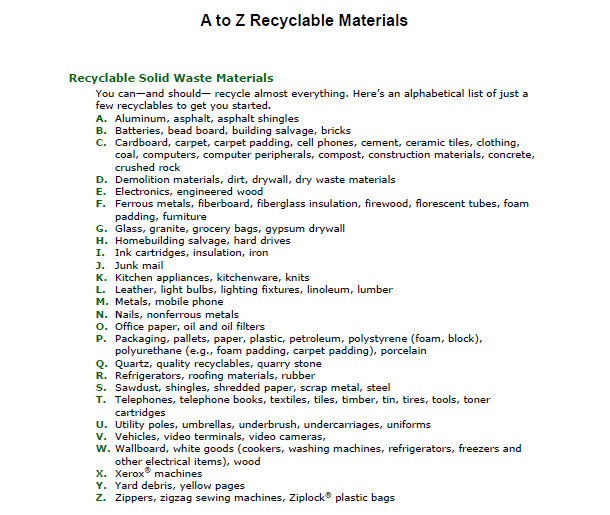
6. When all else fails, do some research:  We were amazed at this A to Z list of recyclable goods compiled by a local recycler (click to view larger):


It is really eye-opening to see all the things that can be recycled if you can find the right facility.  It is possible that you will have to pay a small fee to bring your goods to a recycling facility, but in many cases they will take small loads brought in by individuals (as opposed to corporate recycling) for free and some will even pay for certain materials.  You may have to do a little research, but there could be many facilities in your area who will take some or all of your recyclable materials.  When doing your research be sure to watch for referrals; many recycling centers really care about what they are doing and if there are items that they can not take they may refer you to someone who can.  If you are doing a remodel or demolition project you can also research deconstruction and recycling services in your area.  These types of services will actually come to your site and complete your project in a way that maximizes what can be recycled and reused and take it all away with them.

For you Portlanders reading, here are a few of the services we came across in the metro area:

http://rebuildingcenter.org/

http://www.pdxrestore.org/donors_individual.html

http://www.ecrrecycling.com/index.htm

http://www.oregonmetro.gov/index.cfm/go/by.web/id=525

http://library.oregonmetro.gov/files/construction_salvage_recycling_toolkit_2010.pdf

Happy Recycling!
Related Posts Plugin for WordPress, Blogger...